The integration of artificial intelligence into the creative process of a company like ours undoubtedly generates diverse opinions. I cannot deny that I am a fervent enthusiast of technological evolution, even when it may negatively impact our work, right?
Since my early days as a freelancer, I have always believed that creating soulless products would become a thing of the past. Call it soul, raison d'être, or whatever you prefer. Pinterest is filled with products that, despite their aesthetic beauty, lack a deep essence, contributing nothing significant, not even visually. Many of these products seem devoid of purpose, although perhaps it is I who has failed to find it.
This is why I have always upheld the importance of building a brand, a regulatory framework that gives meaning to all the products that pass through it. At Abisal Studio, we are very skeptical about incorporating new people into the team. It’s not that we are looking for a specific profile or that we are immersed in sectarianism; it’s more about ensuring that they understand and align with the essence of our brand. We aspire for the products emerging from our studio, though not always achieved, to be recognizable. We want clients to seek us out because they appreciate our way of approaching a problem and presenting a concept.
Now, artificial intelligence offers us a wide range of possibilities to expand our creative reservoir. However, as with any other worker, we are reluctant to allow AI to fully integrate into our workflow. There are hundreds of parameters that make one product a sibling of another, and although I do not doubt an algorithm's ability to fit an aesthetic within the studio, I firmly believe there is something beyond: that "soul" which I doubt a machine will ever capture.
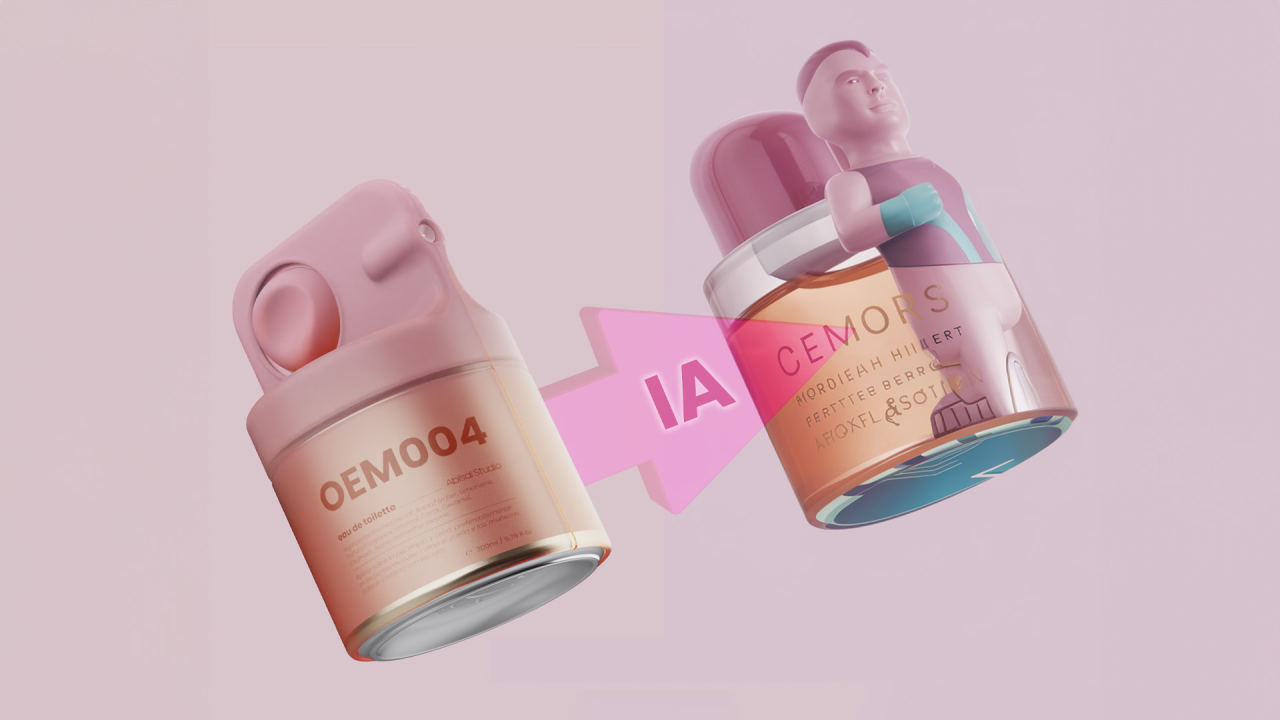
Therefore, when we use AI to generate permutations of a drawing from a prompt, we set a limit: AI can only contribute 20% to the final design, maintaining the original sketch’s weight at 80%. This restriction is merely a way to avoid opening unnecessary fronts. The most important thing is to analyze whether these iterations follow the right path, as it can be tempting to get carried away by unexplored routes. But are you going to renounce all that process prior to the sketch in favor of a promising aesthetic?
I don’t mean to say that our stance is the most correct; it is simply ours. As I mentioned before, it is part of Abisal Studio and one of those hallmarks that compose the soul of this project, for which we hope to be selected by our clients.